

By Freda Miklin, Senior Reporter · The Villager · April 30, 2026
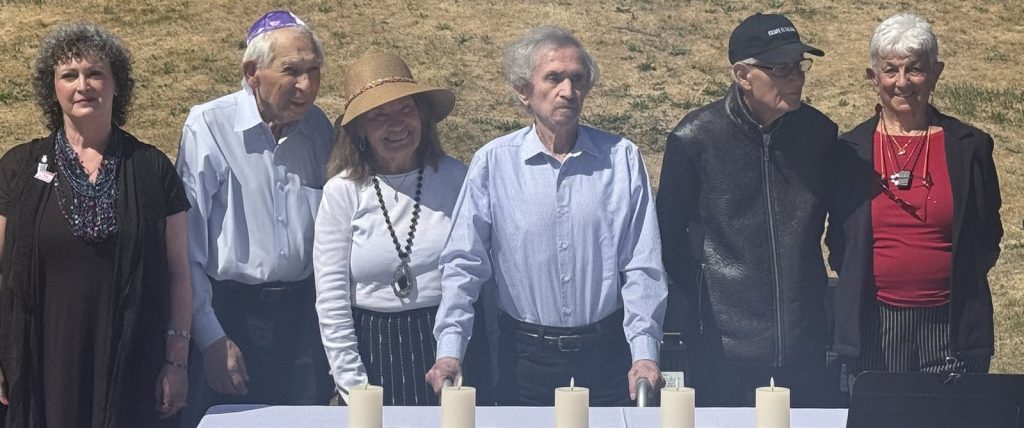
Babi Yar Park in Denver was the sight of an April 19 Holocaust Remembrance Event by local nonprofit Remember 6, commemorating the loss of six million Jews at the hands of Adolph Hitler and the Nazis in World War II. The park is named for a ravine in Kyiv, Ukraine, that was the site of one of the largest mass shootings of WW II. There, on September 29-30, 1941, the Nazis, aided by collaborators, murdered nearly 34,000 Jewish civilians in a single operation.
It has been 81 years since the Germans surrendered, ending WW II. Denver, like many cities in the U.S. and around the world, once had a sizable community of Holocaust survivors. Today, there are barely a couple dozen, and many of them are too ill to leave their homes. It is becoming more and more challenging to hear their stories, firsthand, making events like the one on April 19 increasingly rare.
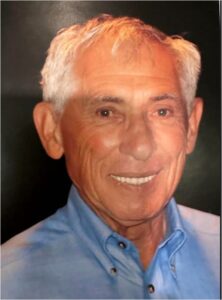
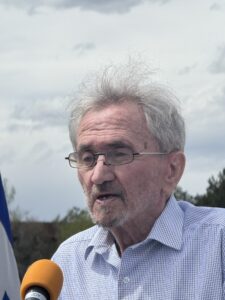
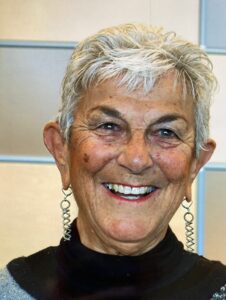
At this event, organized by Tracy Kirscher of Remember 6, those who came heard from some survivors who had shared some of their history during past years but contributed something new, particularly their thoughts on the rise of open antisemitism—Barbara Steinmetz, David Zapiler, Osi Sladek, and Asher Ben Basat.
Father Phil Eberhart of Resurrection Anglican Fellowship in Greenwood Village, a strong supporter of Israel, delivered the invocation, declaring, "We remember those who had their lives taken from them…and we commit ourselves to both the memory and to the new fight before us…as we stand together with those around the world."
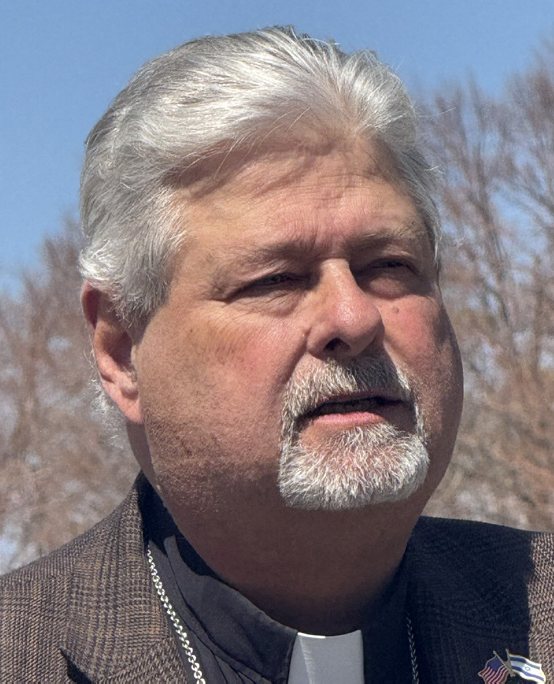
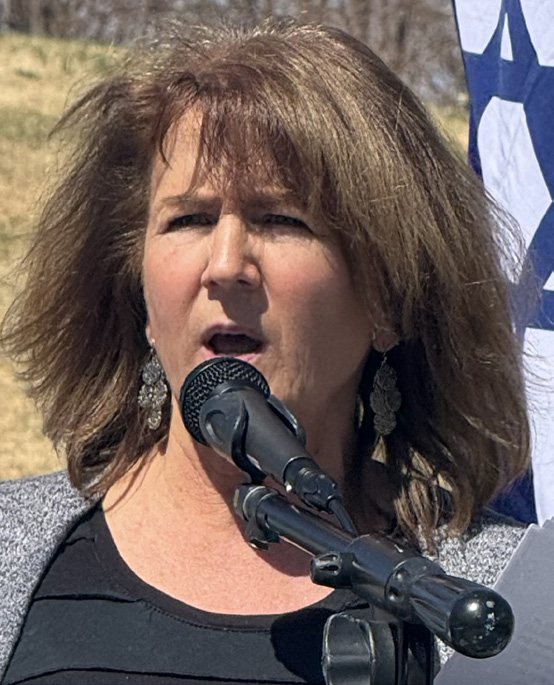
Photos by Freda Zapiler Miklin
This year, speaking for the first time at a Remember 6 event was Hannah Sperber, a 50-year resident of Greenwood Village, whose story was as unique as it was poignant.
Hannah was born in Nuremberg to a Protestant German family in 1936. She described her father as a cruel man who beat his children mercilessly with a garden hose, after making them wait in the basement for him to come and do it. When their family dog became ill, Hannah shared, her father made his children watch him kill it. He was a Nazi officer who "must have been involved with atrocities," she said, adding, "What parent would treat a child that way? A normal person doesn't come up with things like that." She went on, "My childhood was almost nonexistent. I lived in a fairy tale of my books and my stories, dreaming that someday I would get away and become a princess, instead of a dirty little girl that nobody liked."
As the war began to go badly for Germany, Hannah's parents' home was destroyed by an Allied bomb. The family had to separate to be taken in by different relatives. She thinks the relatives who offered her shelter took pity on her, as a "scrawny child whose parents had convinced her she would never amount to anything."
As a student in a new school, Hannah was forced to salute the many Nazi soldiers she encountered, and, "When we came to school, instead of Good Morning, we were required to say Heil Hitler. It never felt right to me."
By chance, or, as Hannah describes it, by the hand of God, she met Henry, who would become her husband years later, in the train station in Nuremberg, as she was returning from school one day. She found out much later that he was a Holocaust survivor from Poland at the age of 10, and made it to the United States, where he joined the U.S. Army, who sent him back to Germany. When she met him, she only knew he was an American soldier.
When Henry met Hannah's parents, everyone got along, she told the crowd gathered at Babi Yar Park. No one, including Hannah, thought for a moment that he might be Jewish. (This reporter knew Henry Sperber from the time I was very young. He was as blond haired and blue-eyed as any German one might imagine). When the subject finally came up and Henry told Hannah he was Jewish, at first she was shocked, because she believed there were no more Jewish people, that Hitler had made them all go away, somehow. "Knowing he was Jewish was fine with me," she said, "But when he told me about what had happened to his family in the Holocaust, I was devastated. I felt so guilty that I had had no idea what had been going on around me."
When Henry's tour of duty in Germany ended, he returned home to Detroit, but left Hannah a necklace with a Jewish mezuzah attached to it. That necklace led her to a local synagogue where sabbath services were being held. There, she said, "For the first time in my life, I felt like I was home. I didn't understand the words, but it was so welcoming, I felt connected. I went every Friday night for a year and a half."
Eventually, when a kind stranger offered to sign for her, promising she could support herself, Hannah came to the United States.
She continued, "I got a job right away, so I wouldn't be a burden on the government. I wanted to convert to Judaism, even though Henry told me it wasn't important to him. But it was to me, so I did it. I taught myself how to keep Kosher. I didn't want to ask anyone because I didn't want anyone to know I was a convert. Later, I felt better about it, but I never stopped being embarrassed about my background. Today, my three daughters have given me six grandchildren and 12 great-grandchildren, nine of whom are observant Jews, and four of whom live in Israel, having made Aliyah (emigrated to Israel) this past January. I am elated about that and grateful for the life I have been given. It means everything to me that I am accepted, even in orthodox circles, as a truly Jewish person. I know now it doesn't matter where I came from. My story is being used in the Phoenix public school system, and I hope it will make a difference. My fairy tale came true and I feel blessed to be a member of this wonderful community."
Barbara Steinmetz was born in Hungary in 1936. Her family left when she was four, as her parents felt the Nazi threat rising. After seeking asylum in France, Spain and Portugal, then being refused by 12 different countries, they finally settled in the Dominican Republic (DR), the only country accepting Jewish refugees. Jews who came there were used for hard labor.
During the four years Barbara spent in the DR, from ages five to nine, she was allowed to live in a Catholic boarding school, on the condition that she and her sister pretend to be Catholic and perform all the religious rituals, because the nuns who ran it didn't want anyone to know they had taken in Jewish children.
The family made it to the United States from there, and moved from state to state for years, always for a better opportunity. Barbara eventually married and settled in Michigan, where she lived for 50 years and raised her family. Barbara and her husband moved to Boulder in 2005. After he passed in 2010, she stayed and was active in the community, including advocating for the release of the Israeli hostages after the October 7, 2023 massacre by Hamas terrorists.
Barbara was at an event seeking their release when she became one of 15 victims of a terror attack on Boulder's Pearl Street mall on June 1, 2025, perpetrated by Mohamed Soliman, who was born in Egypt and came to the US in 2022 from Kuwait, requesting political asylum. Soliman, whose tourist visa had expired, was living in Colorado Springs with his wife and five children. He is currently facing over 70 criminal counts from that incident, including two counts of first-degree murder and 52 counts of attempted first-degree murder. According to news reports, he used "a makeshift flamethrower and Molotov cocktails" as he attacked those who were demonstrating for the hostages' release, shouting, "Free Palestine." Boulder community member Karen Diamond, 82, later died from her injuries sustained in the attack.
The focus of Barbara's talk at Babi Yar Park was the scourge of antisemitism, which, she said, began in Germany in 1933, when ancient tropes "isolating, berating, accusing, beating, and humiliating Jews" were spread, and the world responded with silence. She pointed out that, "Hatred of Jews had existed for millennia, long before the Holocaust, and did not end with the murder of the six million." She warned, "It is our collective responsibility to recognize the pattern of hate-based prejudice, and how it takes root."
Barbara compared the detention centers built to hold immigrants today to the concentration camps used by the Nazis, noting both relied on "stereotypes leading to dehumanization."
For Barbara, what is most important is individual responsibility. She said, "What actions do we take, what do we do when we are witness to dehumanization? At Babi Yar, at the shores of the Danube (where, in December 1944, pairs of Hungarian Jews in Budapest were tied together; then one was shot dead, and they were kicked into the icy river, so the dead one would drag the live one down to drown and die slowly), other places where acts of indescribable cruelty are performed by our fellow human beings."
Osi Sladek said that he and his wife have made it a point to extend their hand in friendship to non-Jews throughout their lives. He believes the best way to confront antisemitism is to show others that Jewish people are no different than them.
David Zapiler said when he encountered antisemitism as a child, he could not understand it. It made no sense to him then and it does not, today, for "People to use religion as a reason to hate someone. We all bleed the same and we leave this world the same way." He said he hopes more people will focus on what they have in common, rather than their differences, as a way to combat antisemitism and other forms of senseless hate.